
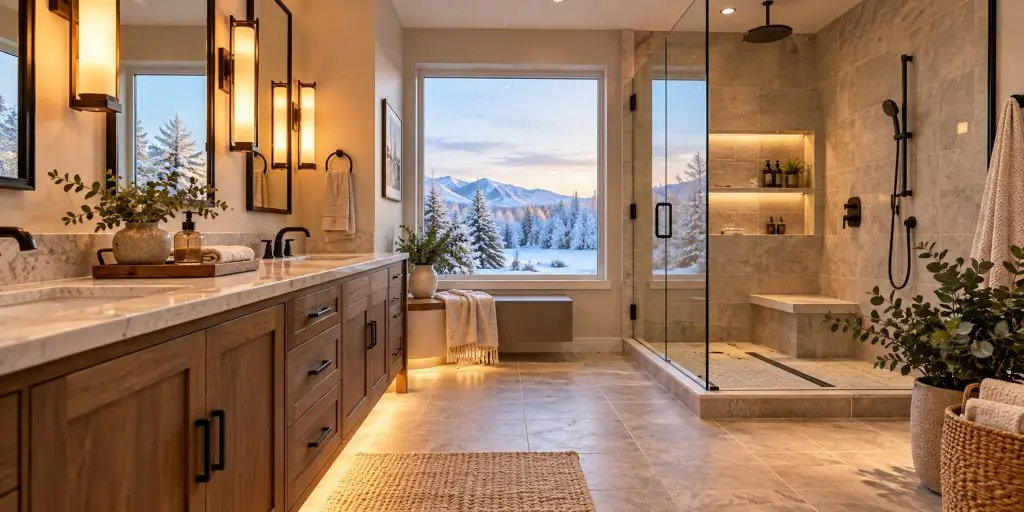
Discover how heated floors, better lighting, smart shower design, and durable materials can make your bathroom more comfortable during Colorado’s colder months.
Introduction
Winter mornings in Northern Colorado can be cold. Really cold.
You leave your warm bed, walk into the bathroom, and step onto freezing tile. The room feels chilly, even though the heat is running. You turn on the shower and wait for the water to warm up. A few minutes later, the mirror is covered in steam.
It’s not the most comfortable way to start your day.
When homeowners think about remodeling a bathroom, they often focus on how it will look. They imagine new tile, a modern vanity, stylish fixtures, or a beautiful glass shower. Those changes can make a big difference, but appearance is only part of what makes a bathroom enjoyable.
A bathroom should also feel good to use.
Warm floors, well-placed lighting, good airflow, and a comfortable shower can make daily routines easier. The right materials can also help the room stand up to years of use.
If you’re planning bathroom remodeling in Northern Colorado, winter is a good time to think about what your bathroom needs most.
Here are five upgrades that can help make your bathroom warmer, brighter, and more comfortable.
Table Of Contents
- 1. Are heated bathroom floors worth installing in Colorado?
- 2. Can heated bathroom floors warm the entire bathroom?
- 3. What type of lighting works best in a bathroom?
- 4. How can I reduce moisture in my bathroom during winter?
- 5. Is an open walk-in shower colder than an enclosed shower?
- 6. What bathroom flooring is best for cold Colorado winters?
- 7. When should I start planning a bathroom remodel before winter?
Key Takeaways
- Heated floors can make winter mornings more comfortable. Electric radiant floor heating can warm tile underfoot, especially when installed during a bathroom remodel.
- Good lighting makes a bathroom easier to use. A mix of ceiling lights, mirror lighting, and dimmers can provide bright light in the morning and softer light at night.
- Proper ventilation helps control moisture. A well-sized exhaust fan can remove damp air after showers and help protect bathroom finishes.
- Shower design affects warmth and comfort. Glass enclosures can help reduce drafts, while walk-in showers, lower entries, and handheld showerheads can make daily use easier.
- Durable materials matter as much as appearance. Water-resistant finishes, slip-resistant flooring, and proper shower waterproofing help a bathroom handle daily use.
- Plan upgrades together for better results. Thinking about heating, lighting, ventilation, and shower layout before construction can help create a bathroom that works well throughout the year.
1. Heated Bathroom Floors: A Warmer Start to Your Day
Stepping onto cold tile is one of the least pleasant parts of a winter morning.
Tile is a popular bathroom flooring choice for good reasons. It comes in many colors and styles, lasts a long time, and handles water well when installed correctly.
But tile can feel especially cold against bare feet.
That’s because it pulls heat away from your skin faster than many other flooring materials. Even when the room is warm, the floor may still feel chilly.
Heated bathroom floors can help solve this problem.
How Heated Floors Work
A heated floor system warms the flooring surface from below.
One common option uses electric heating wires or mats placed beneath the tile. The system connects to a thermostat that controls the temperature.
Some thermostats can be programmed to warm the floor at certain times of day.
Imagine waking up at 6:30 every morning in your Loveland home. Instead of stepping onto cold tile, you could have the floor begin warming before you get out of bed.
The heating system would be hidden beneath the finished floor, so it wouldn’t change the bathroom’s appearance. You would simply notice a more comfortable surface under your feet.
Another option is a hydronic system, which moves warm water through pipes beneath the floor. These systems are often used in larger areas or homes that already have compatible heating equipment.
For a single bathroom remodel, electric floor heating may be a more practical option.
Is Heated Flooring Right for Your Bathroom?
Heated floors can be a welcome upgrade, but they aren’t the right choice for every home.
They often make the most sense when you’re already replacing the bathroom flooring. The heating system can be installed before the new tile goes down.
Adding heat beneath an existing floor may mean removing flooring that’s still in good condition.
The flooring material matters, too. Not every product is designed to work with radiant heat.
Your remodeling team should check the floor materials, the surface beneath them, and the electrical needs before recommending a system.
It’s also helpful to know that heated floors may not warm the entire bathroom. Their main purpose is to make the floor more comfortable, although some systems can also add warmth to the room.
Think about how often you use the space. Heated flooring may be more useful in a main bathroom that’s used every day than in a guest bathroom that’s rarely occupied.
If you love the look of tile but dislike how cold it feels, radiant floor heating is worth discussing during your remodel.
2. Better Bathroom Lighting: Bright Mornings and Relaxing Evenings
Think about your bathroom on a dark winter morning.
The sun hasn’t risen yet. You turn on the light, and the room suddenly feels too bright. Or perhaps the light is too weak, leaving shadows around the mirror and shower.
Neither situation is ideal.
Good bathroom lighting should help you see clearly without making the room feel harsh. It should also work for different activities throughout the day.
That’s why many bathroom designs use several types of lighting instead of relying on one main fixture.
Light Up the Whole Room
General lighting helps you move safely around the bathroom, find your towels, and see where you’re going.
Ceiling lights often handle this job, but their placement matters.
A single fixture in the middle of the ceiling may not reach every part of the room. The shower might feel dark, while the area near the vanity may have unwanted shadows.
Placing lights in better locations can make the room feel brighter and more open.
This can be especially helpful in smaller bathrooms or rooms with limited natural light.
Make the Mirror Easier to Use
The mirror is one of the most important places to have good lighting.
You use it to brush your teeth, shave, style your hair, or get ready for work.
When light comes only from above, it can cast shadows across your face. That makes everyday tasks harder than they need to be.
Lights placed on both sides of the mirror can spread light more evenly. Some mirrors also have built-in lighting.
The goal is simple: you should be able to see clearly without leaning closer to the mirror or moving around to avoid shadows.
Light quality matters, too. Some bulbs show colors more accurately than others, which can help when applying makeup or choosing clothing.
Create a Softer Feel in the Evening
The bright light you need in the morning may feel too strong at night.
After a long day, you might prefer softer lighting while taking a shower or getting ready for bed.
A dimmer switch can help by letting you lower the brightness without turning the lights off.
Small lights beneath a vanity or near a shower niche can also create a gentle glow.
Imagine a Fort Collins family getting ready for work and school in the morning. They need bright lighting so everyone can see clearly.
Later that evening, the same bathroom can feel calmer with the lights turned down.
When planning new lighting, talk with your remodeling team about fixture placement and switch locations. Lights installed near tubs and showers must also be rated for the conditions in those areas.
A good lighting plan makes the bathroom easier and more pleasant to use throughout the day.
3. Bathroom Ventilation: Keep Moisture Under Control
A hot shower feels great on a cold Colorado day.
But as warm water runs, moisture enters the air. Soon, the mirror may fog up, the walls may feel damp, and water may collect around the window.
Some moisture is normal in a bathroom. However, when damp air stays in the room too long, it can affect paint, cabinets, and other surfaces.
That’s why good ventilation matters.
Ventilation helps move moist air out of the bathroom so the room can dry more quickly.
Why Your Bathroom Fan Matters
Most bathrooms have an exhaust fan.
Its job is to pull damp air from the room and send it outdoors.
But not all fans work equally well.
Some older fans are loud. Others may not move enough air for the bathroom’s size or layout.
If your mirror stays foggy long after a shower, your fan may need attention.
A good exhaust fan should be properly sized for the room and connected to suitable ductwork. It should also be quiet enough that people will use it regularly.
Many newer fans offer useful features.
A timer can keep the fan running for a set period after a shower. Some models have sensors that respond when moisture levels rise.
These features can help manage humidity without requiring someone to remember to turn the fan off.
For a household where several people shower one after another, better ventilation can make the bathroom more comfortable between uses.
Where Does the Moist Air Go?
This is an important question.
Bathroom exhaust fans need to move moist air outside the home.
If a fan sends damp air into an attic or another enclosed space, moisture can collect where it doesn’t belong.
The ductwork must be installed correctly so air can leave the house as intended.
During a bathroom remodel, it’s a good time to check whether the existing fan and ducts are working properly.
Ventilation also removes some warm indoor air along with the moisture. That’s why the goal is to run the fan when needed rather than leaving it on all the time without a reason.
Better ventilation may not be the first upgrade that comes to mind, but it can make a noticeable difference in how comfortable your bathroom feels after a shower.
4. Shower Enclosures: Make Your Shower More Comfortable
A new shower can change the look and feel of a bathroom.
You might want more space, a glass door, or a walk-in design that makes getting in and out easier.
But the shower’s layout can also affect how warm and comfortable it feels.
This matters during Colorado’s colder months.
Open Showers Versus Enclosed Showers
Open showers are popular in modern bathrooms.
They often use a single glass panel or have an opening without a door. This can make the bathroom look larger and give the shower a clean, simple appearance.
However, an open shower may allow more cool air to move around you.
On a cold morning, that extra airflow can make showering less comfortable.
A shower with a glass door or a more complete enclosure may help reduce drafts and keep water inside the shower area.
That doesn’t mean an open shower is always a poor choice.
The best design depends on the room’s size, the showerhead’s location, and how the bathroom is heated.
A comfortable shower should look good while also working well in your home.
Choosing the Right Glass Door
There are several types of shower doors.
A hinged door swings open like a regular door. It offers a clean appearance but needs enough space to open safely.
A sliding door moves along a track. This may work better in a smaller bathroom where space is limited.
You can also choose between framed and frameless glass.
Each style has its own appearance, hardware, and cleaning needs.
For example, some door tracks and corners may take more effort to clean than a smooth glass panel.
It’s helpful to think about daily care before choosing an enclosure.
A beautiful shower should also be easy to maintain.
Plan for Comfort as You Get Older
A bathroom remodel is a good chance to think about the future.
Many Northern Colorado homeowners hope to stay in their homes as they get older.
A walk-in shower may make daily use easier, especially when compared with stepping over the side of a bathtub.
A lower entry threshold can make access simpler. A handheld showerhead adds flexibility, while a built-in bench can provide a place to sit.
Grab bars can offer extra support when installed with proper backing inside the wall.
Flooring with good slip resistance is another helpful feature.
Some homeowners may want a shower without a raised curb. This can work in certain bathrooms, but the floor and drain must be carefully designed so water flows where it should.
These features can fit naturally into a modern bathroom.
If you’re exploring walk-in shower remodeling, think about what will make your shower comfortable now and easier to use in the years ahead.
5. Durable Bathroom Materials: Good Looks That Last
A bathroom should look beautiful when the remodel is finished, but it also needs to hold up to daily use.
Think about everything your bathroom goes through. Hot showers, wet towels, water on the floor, cleaning products, and people coming and going throughout the day.
The materials you choose need to handle those conditions.
They should also match the style you want for your home.
Choose Flooring That Fits Your Needs
Porcelain and ceramic tile are common choices for bathroom floors.
They come in many sizes, colors, and patterns. Some look like natural stone, wood, or concrete.
You might prefer soft, warm colors or a clean white-and-gray design.
No matter which style you choose, think about how the floor will perform when wet.
Tile with the right surface texture can provide better grip.
Some types of vinyl flooring may also work in bathrooms, but suitability depends on the product and how it’s installed.
If you’re planning heated floors, make sure the flooring is approved for use with the heating system.
The right material should look good, feel comfortable, and handle normal bathroom use.
What You Don’t See Matters, Too
When you look at a new shower, you notice the tile, glass, and fixtures.
But one of the most important parts is hidden behind the finished surfaces.
A shower needs a waterproofing system to help keep water from reaching the walls and floor structure.
Tile and grout alone are not enough to stop all water from getting through.
Proper waterproofing is needed around corners, floors, walls, and places where plumbing passes through the surface.
If these areas aren’t built correctly, water may reach places where it can cause damage.
That’s why the work behind the tile matters just as much as the finished appearance.
Use Colors and Materials That Feel Warm
A bathroom doesn’t need dark colors to feel cozy.
Soft cream tile, warm wood tones, and gentle lighting can make a room feel welcoming.
You can also use darker colors, such as navy or charcoal, to add contrast.
For example, a bathroom with a wood-look vanity, light tile, and warm lighting can feel modern without looking cold.
Countertops and cabinets matter, too.
Quartz is one countertop option that many homeowners choose because it comes in a wide range of styles and is generally easy to care for when cleaned as directed.
Bathroom cabinets should also be made and finished to handle moisture.
Good storage makes the room easier to use. Drawers for hair tools, shelves for towels, and cabinets for everyday supplies can help keep counters clear.
When everything has a place, busy mornings become a little easier.
6. Make Your Bathroom Upgrades Work Together
Each of these improvements can make your bathroom more comfortable.
But they often work best when planned as part of the same project.
Imagine an older bathroom with cold tile, poor lighting, a noisy fan, and a small shower.
You could replace the vanity and flooring to give the room a newer look.
But the bathroom might still feel cold, dark, and cramped.
A better plan would begin with the problems you want to fix.
If the floor is always cold, you might add radiant heating while replacing the tile.
If the mirror area is dark, you could move the lights to better locations.
If the fan is noisy and doesn’t clear moisture well, you could replace it during the remodel.
And if the shower feels too small, you could change its layout or glass enclosure.
These choices can work together to make the bathroom more pleasant to use.
Of course, you don’t need every upgrade.
Some homeowners care most about a larger shower. Others want better storage, warmer floors, or improved lighting.
If you’re exploring bathroom remodeling options in Loveland, start by thinking about what bothers you most in your current bathroom.
What feels uncomfortable? What takes too much time to clean? What would make mornings easier?
Your answers can help you decide where to focus your remodeling plans.
7. Plan Your Bathroom Remodel Before Winter
If you want a warmer, more comfortable bathroom during the cold months, it’s smart to start planning early.
A bathroom remodel involves more than choosing tile and paint colors.
Some upgrades need electrical work. Others may require changes to plumbing, flooring, or walls.
For example, heated floors need to be planned before new flooring is installed.
New shower doors need enough space to open and close.
Better ventilation may require changes to the fan or ductwork.
Making these decisions before construction begins can help the project move more smoothly.
It’s also helpful to think about how the work will affect your household.
If it’s your only full bathroom, talk with your remodeling team about how you’ll manage while the work is underway.
Project schedules depend on the work being done, material choices, and the condition of the existing bathroom.
At NOCO Remodeling & Design Center, we help homeowners explore bathroom layouts, materials, and features that fit their needs.
Our design services and showroom give homeowners a place to compare options and discuss their ideas.
If you’re planning bathroom remodeling in Fort Collins or updating a home in Loveland, start by deciding what you want your bathroom to do better.
That will help you plan a space you’ll enjoy using every day.
Conclusion: Make Your Bathroom More Comfortable This Winter
Colorado winters can be beautiful, but cold bathroom floors and chilly showers aren’t much fun.
A bathroom remodel can improve more than the way your room looks.
Heated floors can make mornings more pleasant. Better lighting can help you get ready for the day. Good ventilation can remove damp air after showers. A well-planned shower can feel more comfortable and be easier to use. Durable materials can help your bathroom stay in good shape.
You don’t need every upgrade to enjoy a better bathroom.
Start with the problems you notice most often. Then choose improvements that fit your home, your daily routine, and your plans for the future.
Ready to Plan a More Comfortable Bathroom?
NOCO Remodeling & Design Center helps homeowners in Loveland, Fort Collins, and nearby Northern Colorado communities plan bathroom updates that balance comfort, style, and everyday use.
If you’re thinking about heated floors, a walk-in shower, or a full bathroom remodel, we’d be happy to talk through your ideas.
Request a free consultation or call (970) 397-2741 to set up your appointment.
Let’s make your bathroom a place that feels good to use, even on the coldest Colorado mornings.
Frequently Asked Questions
1. Are heated bathroom floors worth installing in Colorado?
Heated bathroom floors can be a useful upgrade during Northern Colorado’s cold winters. They make tile more comfortable under bare feet and can be set to warm up before your morning routine. They’re often easier to install when you’re already replacing the bathroom flooring.
2. Can heated bathroom floors warm the entire bathroom?
Heated floors can add warmth to a bathroom, but they may not replace the room’s main heating system. The amount of heat they provide depends on the floor size, insulation, and heating system. Your remodeling team can help determine what will work in your space.
3. What type of lighting works best in a bathroom?
A mix of general lighting, mirror lighting, and softer accent lighting works well in many bathrooms. Ceiling lights brighten the room, while lights near the mirror help with grooming. Dimmer switches let you adjust the brightness throughout the day.
4. How can I reduce moisture in my bathroom during winter?
Use a properly sized exhaust fan that sends damp air outdoors. Running the fan during and after showers can help remove extra moisture. Timer controls and humidity sensors can make this easier. If your bathroom stays damp for a long time, the fan and ductwork may need to be checked.
5. Is an open walk-in shower colder than an enclosed shower?
An open shower may feel cooler because more air can move around the showering area. A glass door or enclosure can help reduce drafts. The best choice depends on your bathroom’s size, heating, and layout.
6. What bathroom flooring is best for cold Colorado winters?
Porcelain and ceramic tile are durable choices that work well in many bathrooms. They can feel cold underfoot, but compatible radiant heating systems can improve comfort. The right flooring should also provide good grip when wet and be suitable for bathroom use.
7. When should I start planning a bathroom remodel before winter?
It’s best to begin planning well before you want the work completed. Design choices, material availability, and the amount of construction needed can affect the schedule. Starting early gives you more time to discuss options and make decisions without rushing.
This article is a collaboration between NOCO Remodeling & Design and OpenAI’s ChatGPT. Created on Oct 27, 2026, it combines AI-generated draft material with Noco’s expert revision and oversight, ensuring accuracy and relevance while addressing any AI limitations.
Recommended Reading
1. Measure Guideline: Selecting Ventilation Systems for Existing Homes
Publisher: U.S. Department of Energy, Building America Program
This technical guide explains how to select ventilation systems for existing homes. It covers airflow, fan performance, ductwork, controls, and testing. It is especially useful for remodeling professionals planning bathroom ventilation upgrades.
Read the guide: https://www1.eere.energy.gov/buildings/publications/pdfs/building_america/measure_guide_ventilation_systems.pdf
2. Building Enclosure: Building Science – Introduction to Moisture Flow
Publisher: U.S. Department of Energy, Building Science Education Solution Center
This resource explains how moisture moves through building materials and wall systems. It provides helpful background for professionals working on bathroom waterproofing, condensation control, and moisture management in cold climates.
Read the article: https://bsesc.energy.gov/energy-basics/building-enclosure-building-science-intro-moisture-flow
3. Home Heating Systems
Publisher: U.S. Department of Energy
This resource explains different home heating methods, including radiant heating systems. It provides useful background for professionals comparing heated bathroom floors with other heating options and reviewing how heating choices affect comfort.
Read the resource: https://www.energy.gov/sites/default/files/2014/01/f6/homeHeating.pdf